

Roof guides
When to replace your roof — and when a repair is enough
16 May 2026 · Scott Ryan
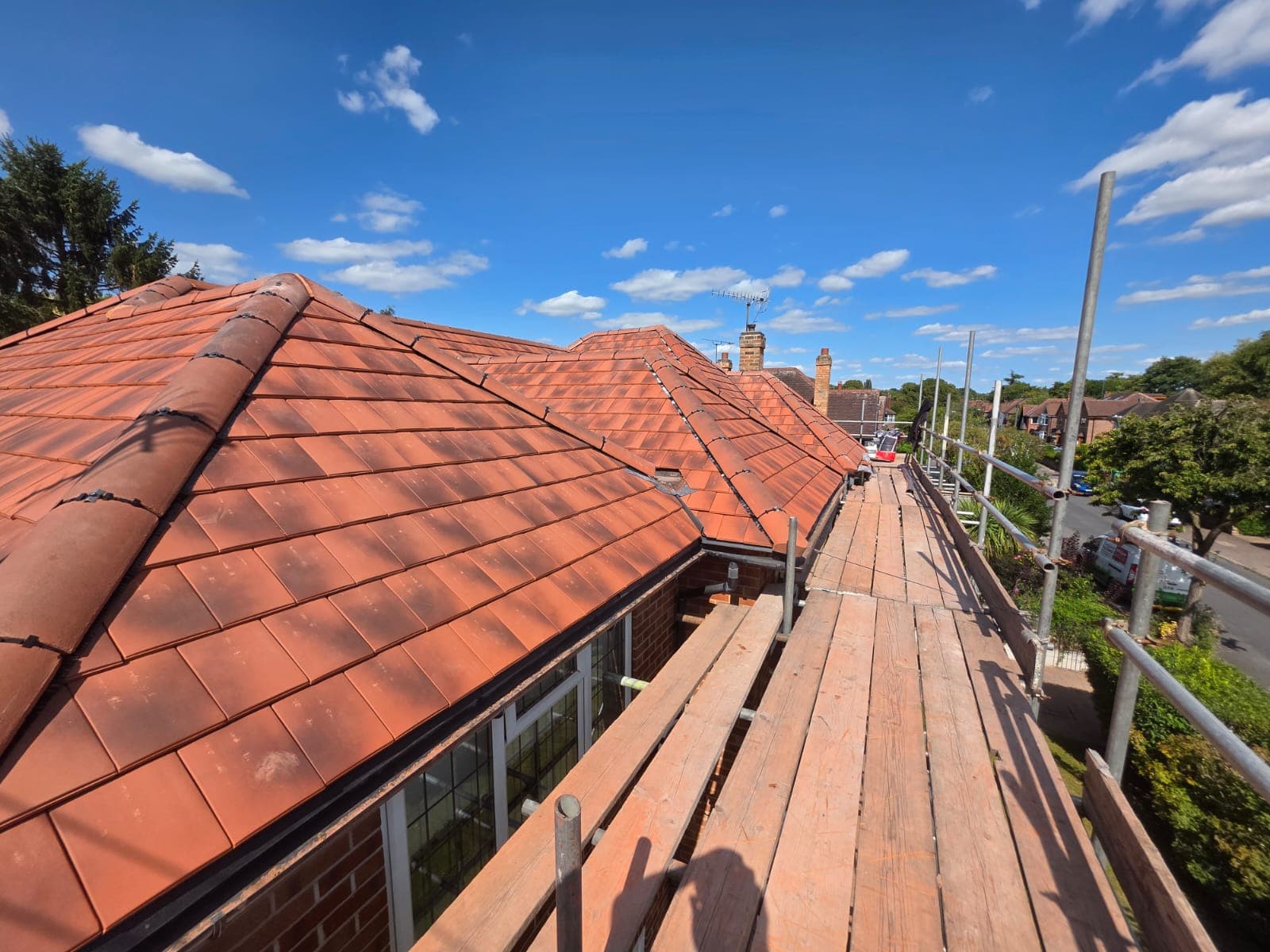
Most roofs don't fail in one storm — they fail slowly, and the warning signs are sitting on your ceilings, in your loft, and in the gutter at the back of the house. Here's what we look for when we survey, and where the line sits between a repair and a full re-roof.
Signs you can fix with a repair
Spotted any of these? A targeted repair is usually enough:
- One or two slipped tiles after a storm
- A single damp patch on a ceiling that lines up with a flashing
- Lead flashing pulling away from a chimney or wall
- A blocked or leaking valley — usually a clear-out plus patch
- Sagging guttering pulling away from the fascia
These are an afternoon's work for two fitters. Cheaper than a re-roof, and they'll keep the building dry for years if the rest of the roof is sound.
Signs you're looking at a re-roof
When several of these stack up, replacing the roof costs less over five years than chasing leaks every winter:
- Tiles slipping in multiple places after every windy spell — the nails or pegs holding them have gone
- Daylight visible through the roof from inside the loft
- Felt that crumbles to the touch (concrete or clay tile roofs older than ~50 years often have failing felt)
- Multiple sagging valleys or ridge lines
- Damp patches on ceilings in different rooms
- Mortar bedding crumbling out of ridges and verges
- Tiles delaminating or cracking en masse — common on cheap 1970s concrete tiles
- Insurance premiums creeping up because of repeated claims
“Nine times out of ten the homeowner already knows. We're just confirming it with a survey and a price.”
— Scott Ryan, WeatherTech
The honest answer if you're unsure
Book a free survey. We'll go up on the roof, into the loft, and back to you with a written quote that covers both options where it makes sense. No high-pressure sales — if it's a repair job we'll tell you, even though the bigger ticket is the re-roof.