
Case studies
Full re-roof case study: a 1950s semi in Mansfield Woodhouse
9 September 2026 · Scott Ryan
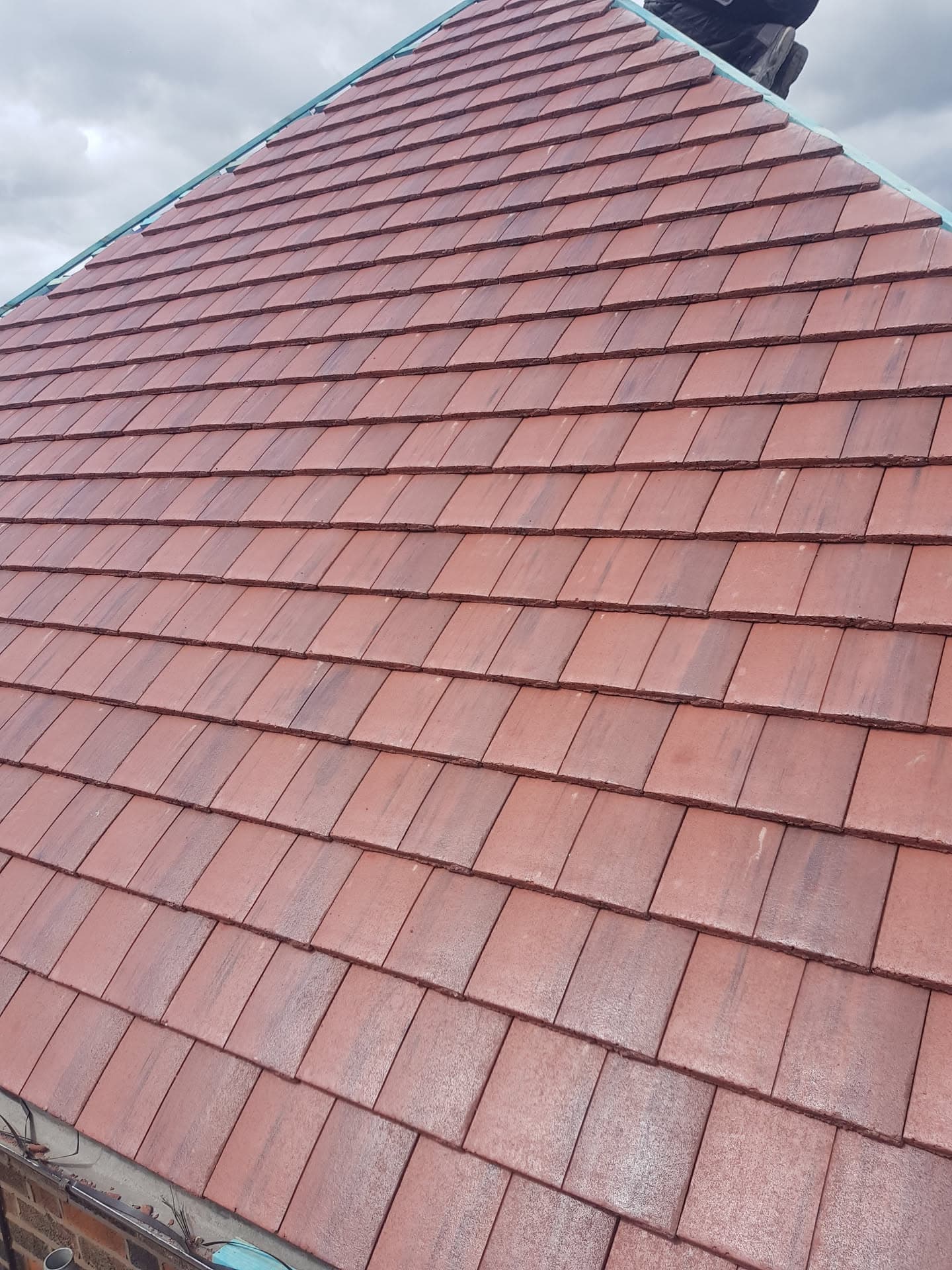
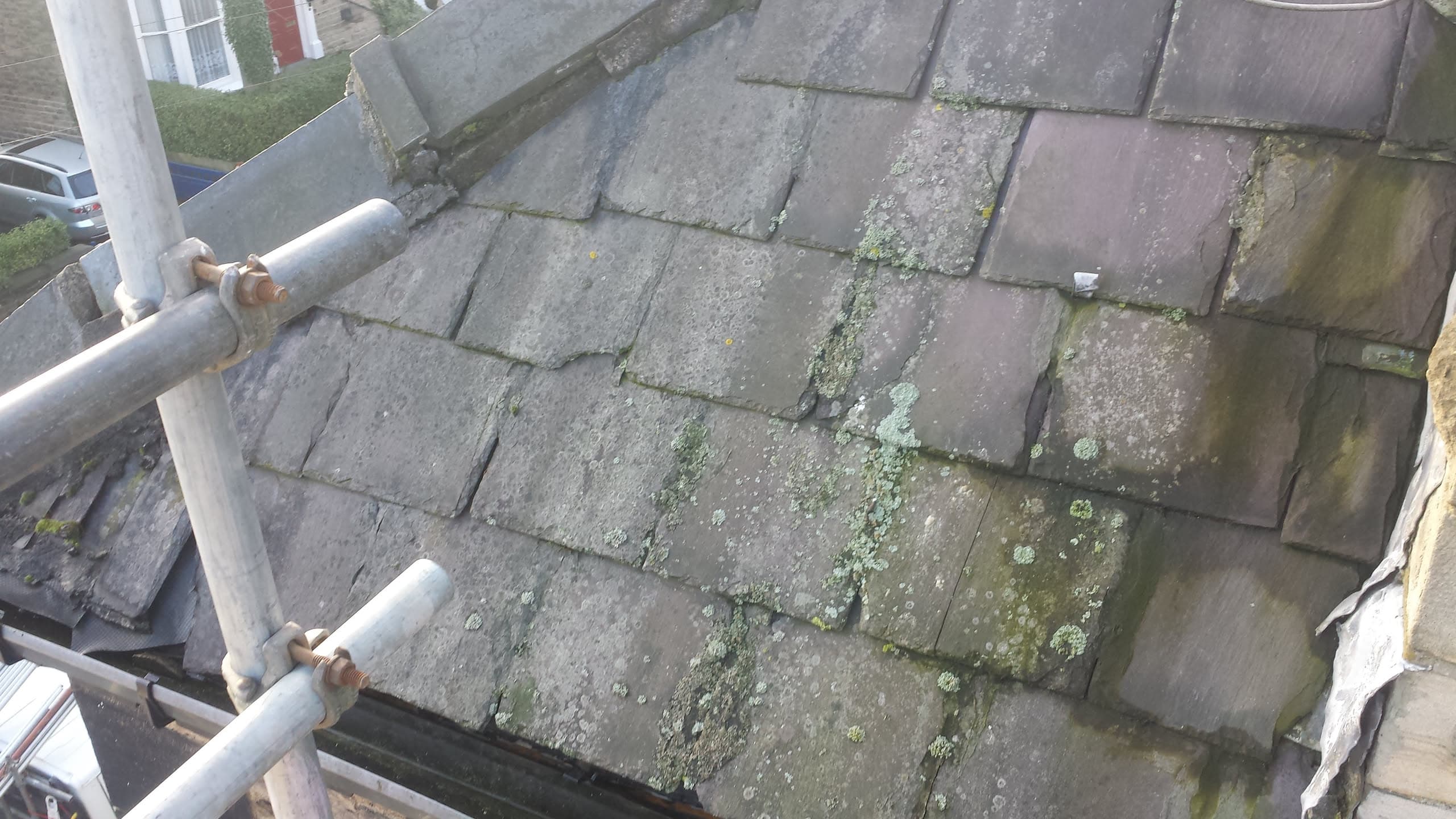
This was a 1956-built three-bedroom semi in Mansfield Woodhouse. The original concrete tiles had lost their factory colour over many years and were beginning to crack across the roof. The customer had been patching slipped tiles for several winters, but the roof was approaching the point where another bad storm could cause much more serious damage.
What we found on the survey
- Concrete tiles delaminating across the south-facing slope
- Perished felt underlay that crumbled when tested
- Battens generally sound, but with two areas needing attention above the bathroom
- Lead flashings around the chimney pulling away from the brickwork
- Crumbling ridge mortar across most of the ridge run
The work carried out
We scaffolded the property and stripped both roof slopes back to the rafters over two days. The damaged tiles were sent for recycling, while a small number of reclaimable plain tiles went to a reclamation yard for possible reuse on heritage work.
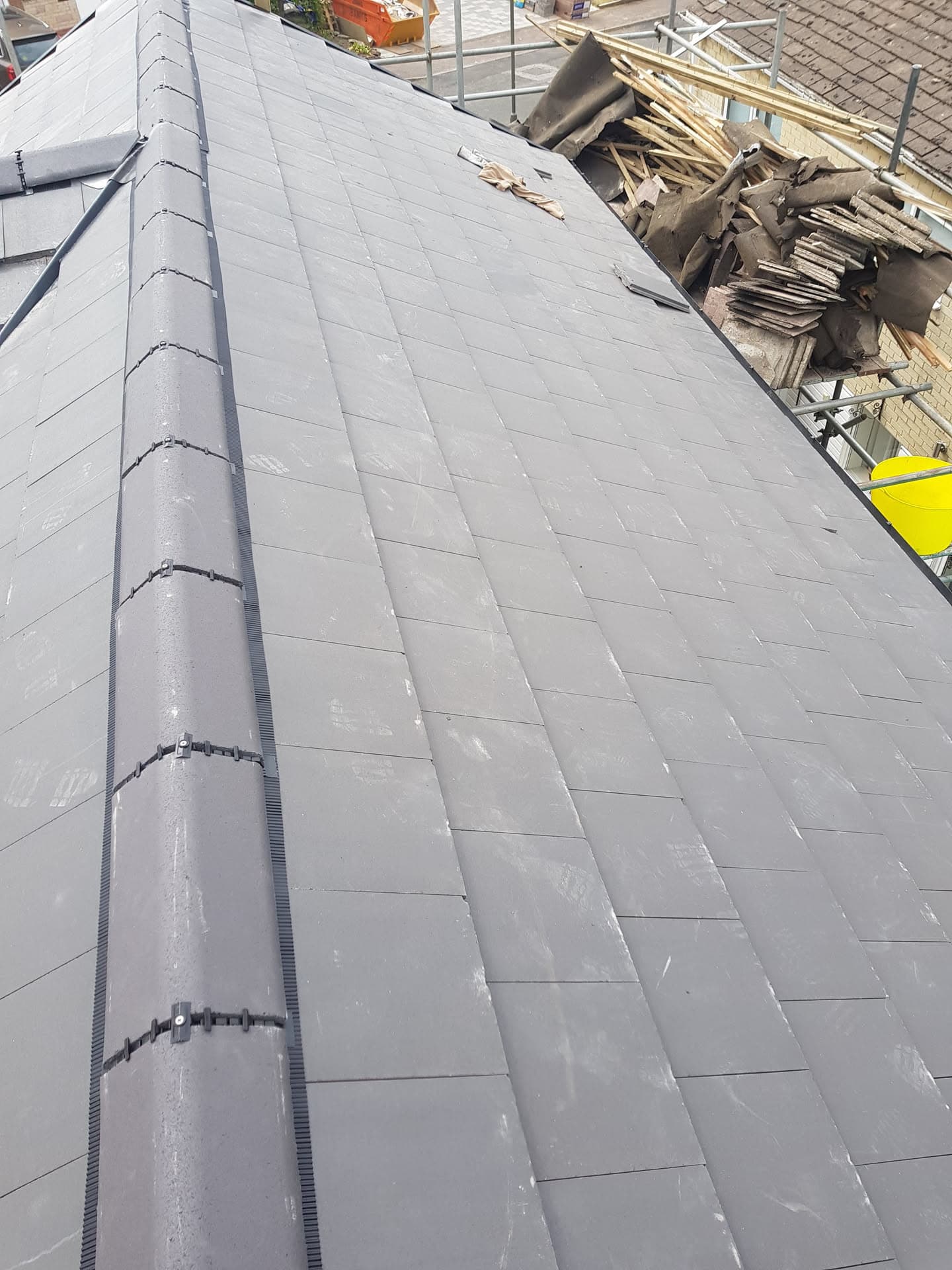
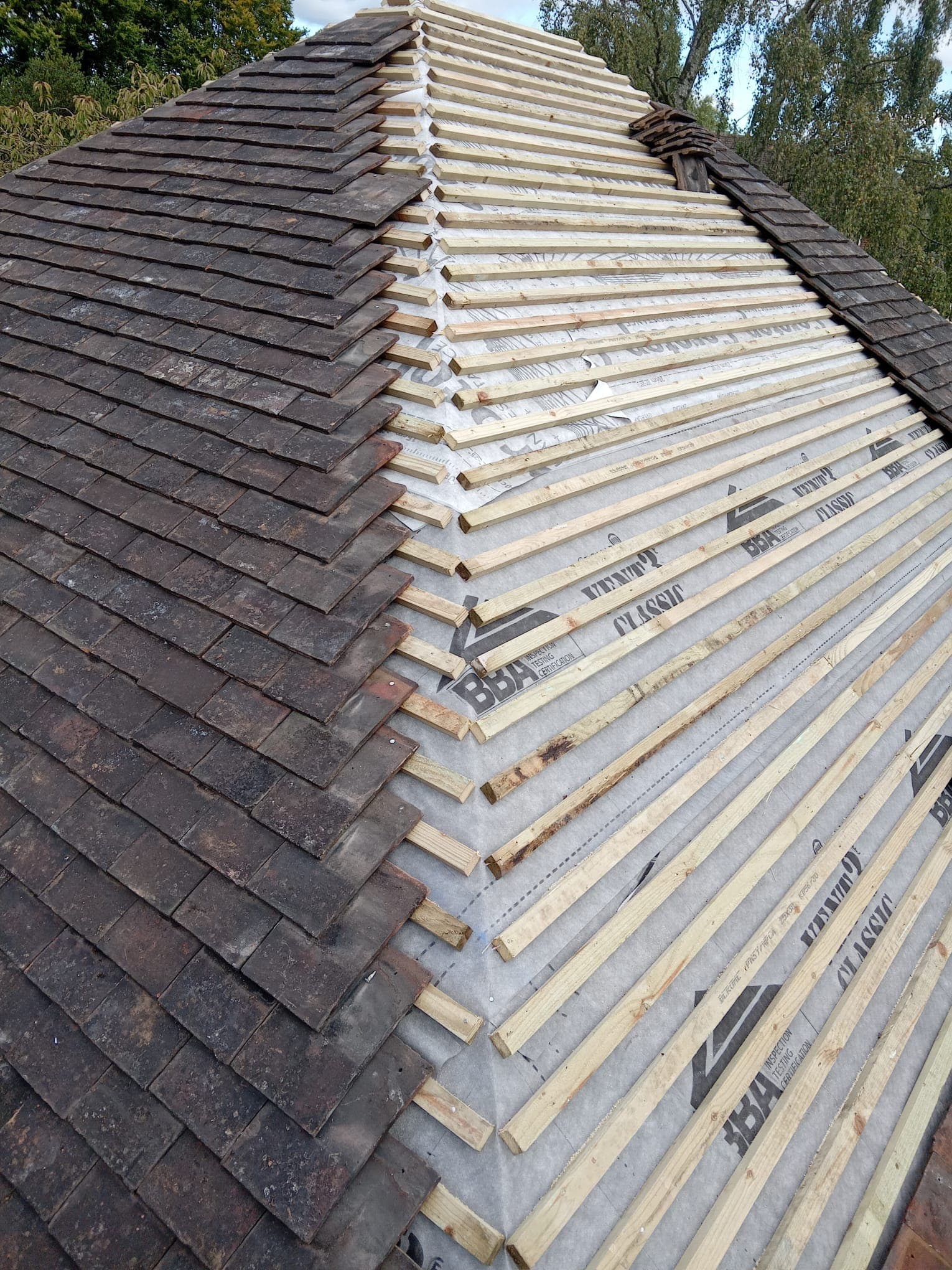
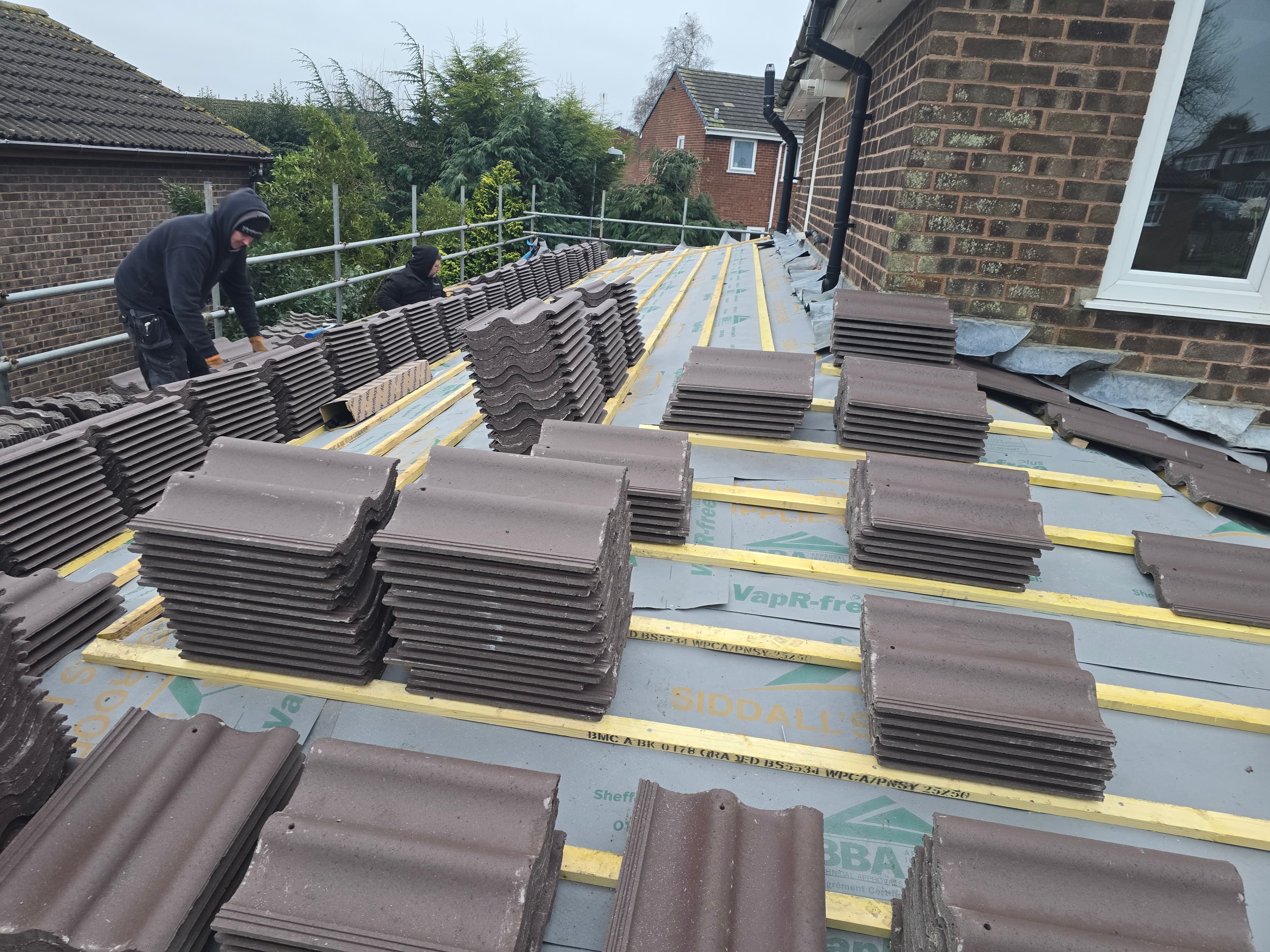
The roof was re-felted with Marley Universal breathable underlay and re-battened with treated softwood battens. We then fitted Marley Modern smooth-finish tiles in anthracite, renewed the lead flashings around the chimney and installed a dry-fix ridge system rather than relying on a long run of mortar.
How long did it take?
The project took six days on site. The customer's main concern was noise, so the team worked from 8am to 4pm and kept the evenings clear. The scaffold stayed in place for the work and was removed after the roof had been completed and checked.
What did the project cost?
The project sat in the £11,000–£14,000 range. That figure reflected a complete strip and re-roof rather than simply laying new tiles over the existing covering: scaffold, removal, new breathable underlay, treated battens, new lead flashings and the dry-fix ridge system were all part of the scope.
The paperwork and protection
The customer received WeatherTech’s 10-year workmanship guarantee, IWA deposit protection for the re-roof and the manufacturer warranty for the Marley tiles, with the project paperwork handed over at completion.
The lesson for comparing quotes
The visible tile is only the final layer of a re-roof. When you compare quotes, check whether the price also covers the underlay, battens, chimney details, ridge system, scaffold, waste and paperwork. That is how you compare the actual roof being built, not just the colour of the tile.
The work in pictures
The photographs below are selected from the approved WeatherTech job library at photos.weathertechroofing.co.uk. They show the main stages customers should expect. Locations have been cross-checked against the Google Photos Places map, but we use area-level location only, so no customer address is published; the images are representative examples rather than a claim that every frame is the same property.
Before: an ageing roof covering
Strip-back: new underlay and battens
During installation
Finished roof