

Roof guides
Can you re-roof just one side of a house?
9 September 2026 · Scott Ryan
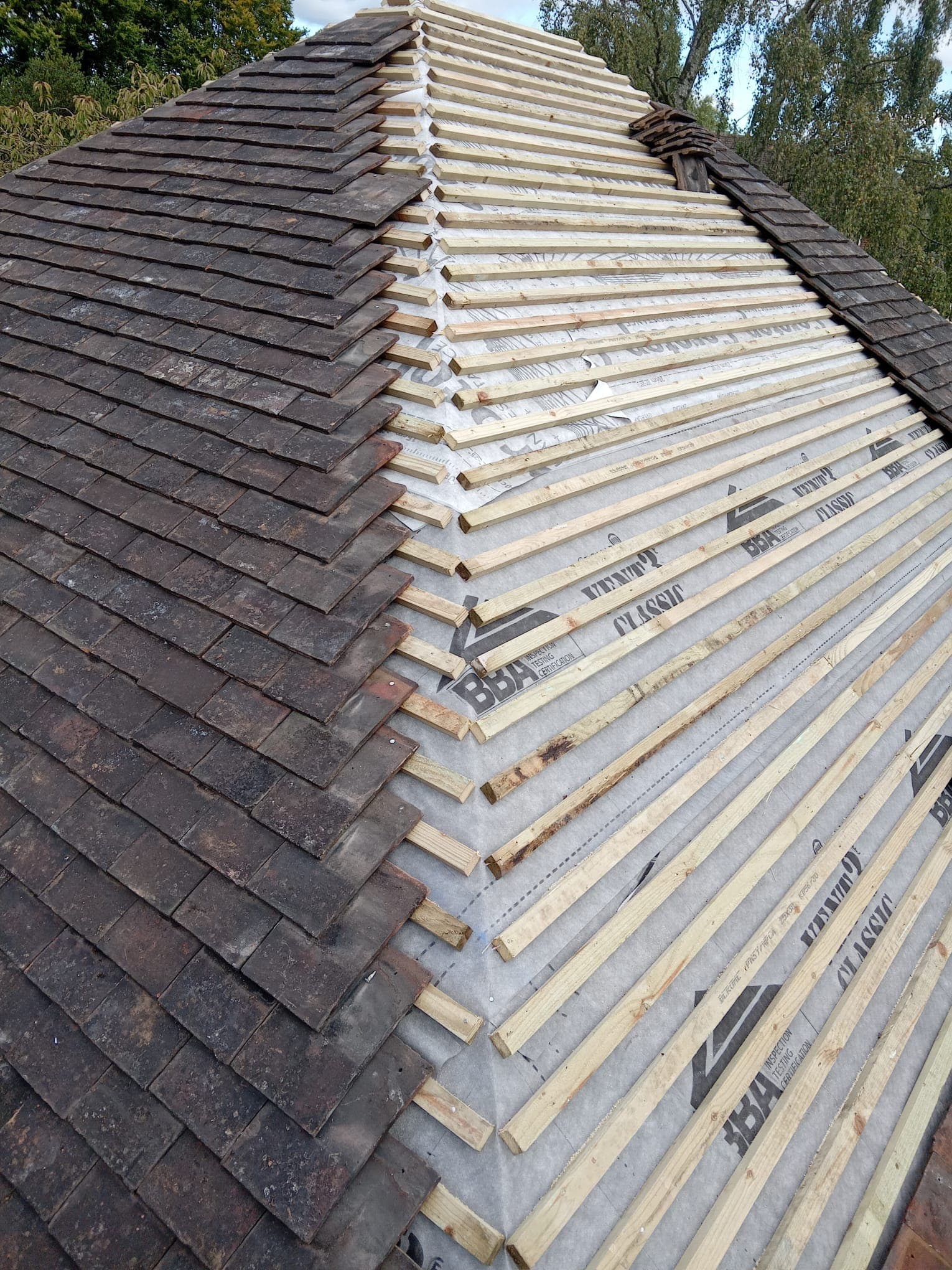
Yes, sometimes. Re-roofing one side of a house can be a sensible way to deal with a roof that has failed on one elevation while the other side is still sound. But it is not simply a case of taking off one set of tiles and putting new ones back on. The ridge, eaves, valleys, chimneys, flashings and the connection between the new and old work all need to be planned properly.
When a partial re-roof can make sense
A partial re-roof is usually considered when the problem is genuinely limited to one area and the rest of the roof still has useful life left in it. Examples include:
- One slope has suffered much heavier weathering or exposure than the other
- Tiles or slates are failing on one elevation but the remaining covering, underlay and battens are in sound condition
- A local alteration, extension or roof window has created a section that needs renewing
- The work is being phased, with a clear plan for protecting and finishing the remaining roof later
- The existing and replacement materials can be sourced and detailed without creating a weak or untidy junction
The decision should come from the condition of the roof, not just from a wish to make the job cheaper. A good survey should show you why one side can reasonably be left in place.
When doing half the roof becomes false economy
The two slopes may look separate from the ground, but they are often the same age and were built with the same underlay, battens and fixings. If those hidden parts are failing across the roof, renewing only the most obviously damaged side can mean paying for scaffold and labour twice, then returning to the same problem later.
- The underlay is perished or the battens are no longer reliable on both slopes
- There are repeated leaks or slipped tiles in more than one location
- A chimney, valley, roof window or change in roof level affects both areas
- The old tiles are difficult to match and the visual difference will be obvious
- The access, scaffold and waste costs are almost the same whether one side or both sides are completed
The difficult bit is the join
The most important part of a partial re-roof is usually the junction between the new work and the roof that is staying. At the ridge, valley or abutment, the roofer needs to make sure water is directed over the covering rather than into the old roof build-up. That may involve new leadwork, a properly formed valley, a dry-fix ridge detail or another agreed weathering detail, depending on the roof design.
On a semi-detached or terraced property, the party-wall detail also needs care. Where a bonding gutter or other separation detail is required, the quote should say exactly what is being installed and how the completed detail is covered by the guarantee.
New tiles beside old tiles rarely look identical
This is one of the things homeowners often notice only after the work starts. Even when the profile and colour are described as the same, new tiles or slates will usually look different beside a roof that has weathered for decades. The old covering may have faded, picked up lichen, changed colour in the sun or been replaced with slightly different batches over the years.
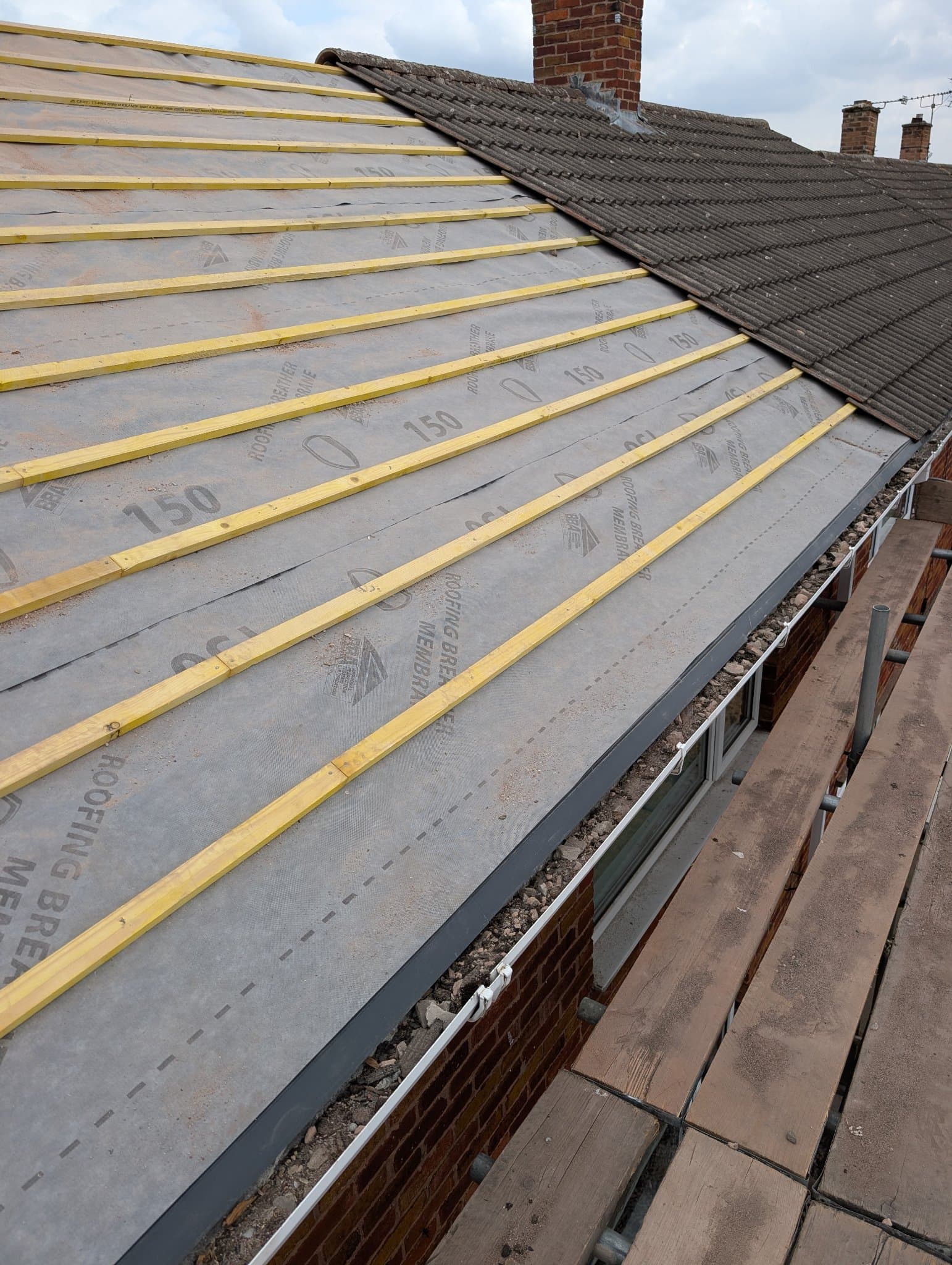
A roofer should show you the proposed tile or slate before ordering it and be honest about the likely difference. If an exact match is not available, the choice may be between accepting a visible change, renewing a larger area or looking for a suitable reclaimed material.
What about insulation and Building Regulations?
A partial job is not automatically outside the rules just because it covers less than the whole roof. The extent of the work, the roof construction and the insulation being disturbed all matter. Your quote should explain whether notification or certification is required, what insulation work is included and which document you will receive when the job is complete.
Can a roof be renewed in stages?
Yes, but the stages need to be agreed before the first tile is removed. The written scope should identify exactly what is included in stage one, how the remaining roof will be protected, how the future work will connect to it and whether the scaffold can be reused. It should also state whether the guarantee covers the junction between the two stages.
A staged approach can help with budgeting or timing, but it should not leave a temporary detail that becomes permanent by accident. If the first phase is likely to be the only phase for several years, it needs to be finished as a proper roof in its own right.
Questions to ask before choosing a partial re-roof
- What evidence shows that the remaining side of the roof is still sound?
- Are the underlay, battens and fixings being checked, or are only the visible tiles being replaced?
- How will the new-to-old junction be weathered?
- Can the proposed tile or slate be matched, and can I see a sample?
- Are scaffold, waste removal, leadwork and any compliance paperwork included?
- Does the guarantee cover the junction, including both sides of any bonding-gutter detail where applicable?
- What happens if hidden defects are found once the roof is opened?
Our rule of thumb
If one slope is clearly failing and the remaining roof is genuinely sound, a partial re-roof can be the right solution. If both sides are the same age and showing the same hidden defects, renewing the whole roof is often the more economical long-term decision. The right answer comes from inspecting the roof, not from assuming that a full replacement is always necessary—or that doing half will always save money.