

Seasonal
Your autumn roof checklist: 20 minutes now saves a November leak
10 August 2026 · Scott Ryan
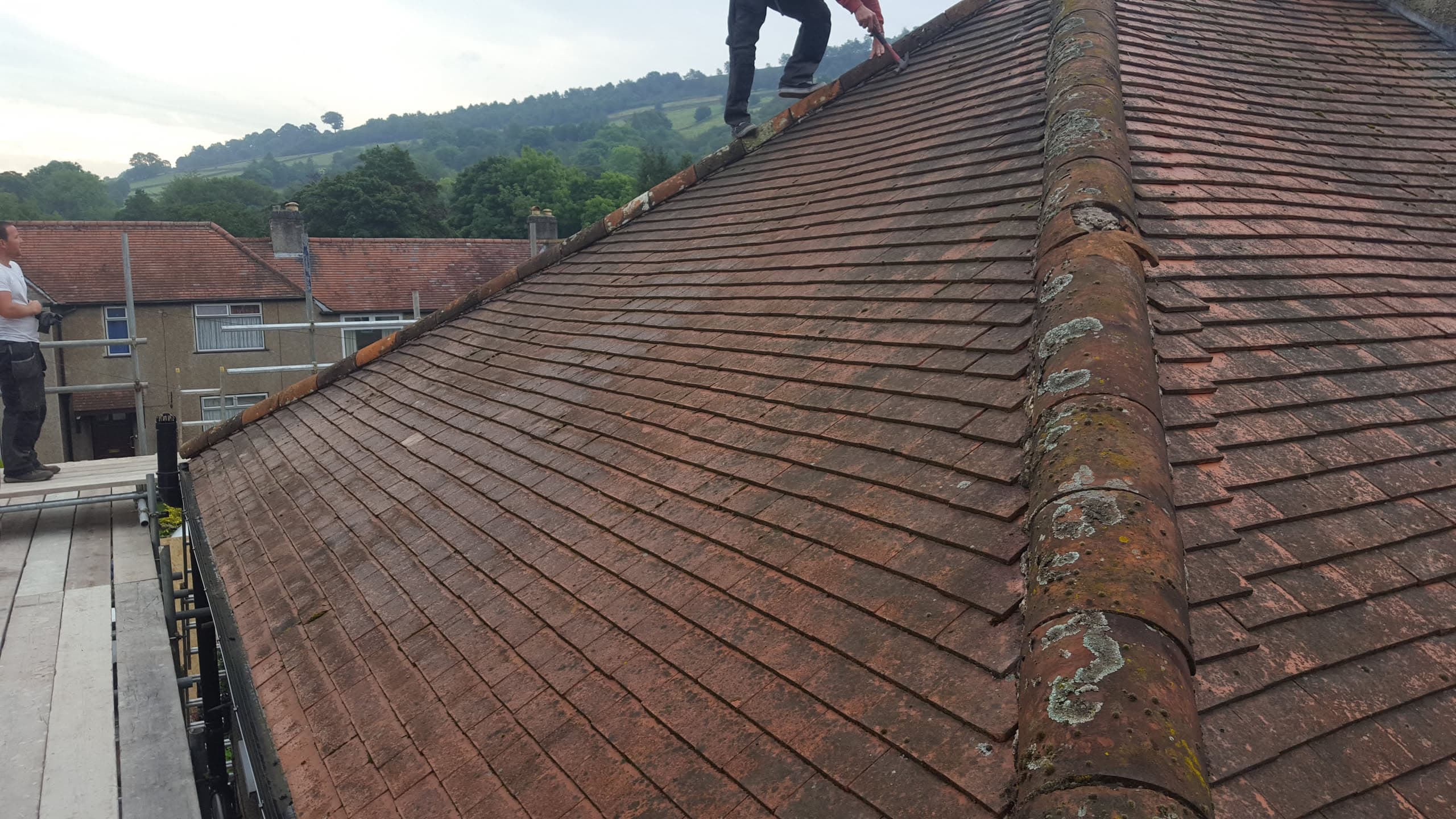
Nearly every emergency call we take between November and February could have been a twenty-minute job in September. Water only needs one way in. Autumn is when it gets three: leaves in the gutters, tiles that shifted in the summer heat, and mortar that has been quietly crumbling since the last frost.
Here is what we check on our own houses before the weather turns. Most of it you can do from the ground with a decent pair of eyes. Some of it you shouldn't do at all without a proper ladder and someone footing it — we've flagged which is which.
1. Gutters and downpipes — start here
This is the single highest-value job on the list and the one most people put off. A blocked gutter doesn't just overflow. Water backs up behind the fascia, runs down the back of the board where you can't see it, and rots the timber from the inside. You find out two years later when the paint starts flaking and by then it's a replacement, not a repair.
- Wait until most of the leaves are down — a clear-out in early October and you'll be doing it again in November
- Run a hose or a bucket of water down each downpipe and watch the bottom. Nothing coming out means a blockage lower down, not a gutter problem
- Look at the joints in heavy rain. Drips at a joint are usually a perished seal, which is a cheap fix
- Check the ground at the base of each downpipe. A patch of green algae on the brickwork means it's been overflowing for a while
- Sagging between brackets means the brackets have gone or the fascia behind them has softened — get that looked at properly
2. The tiles that moved in the summer
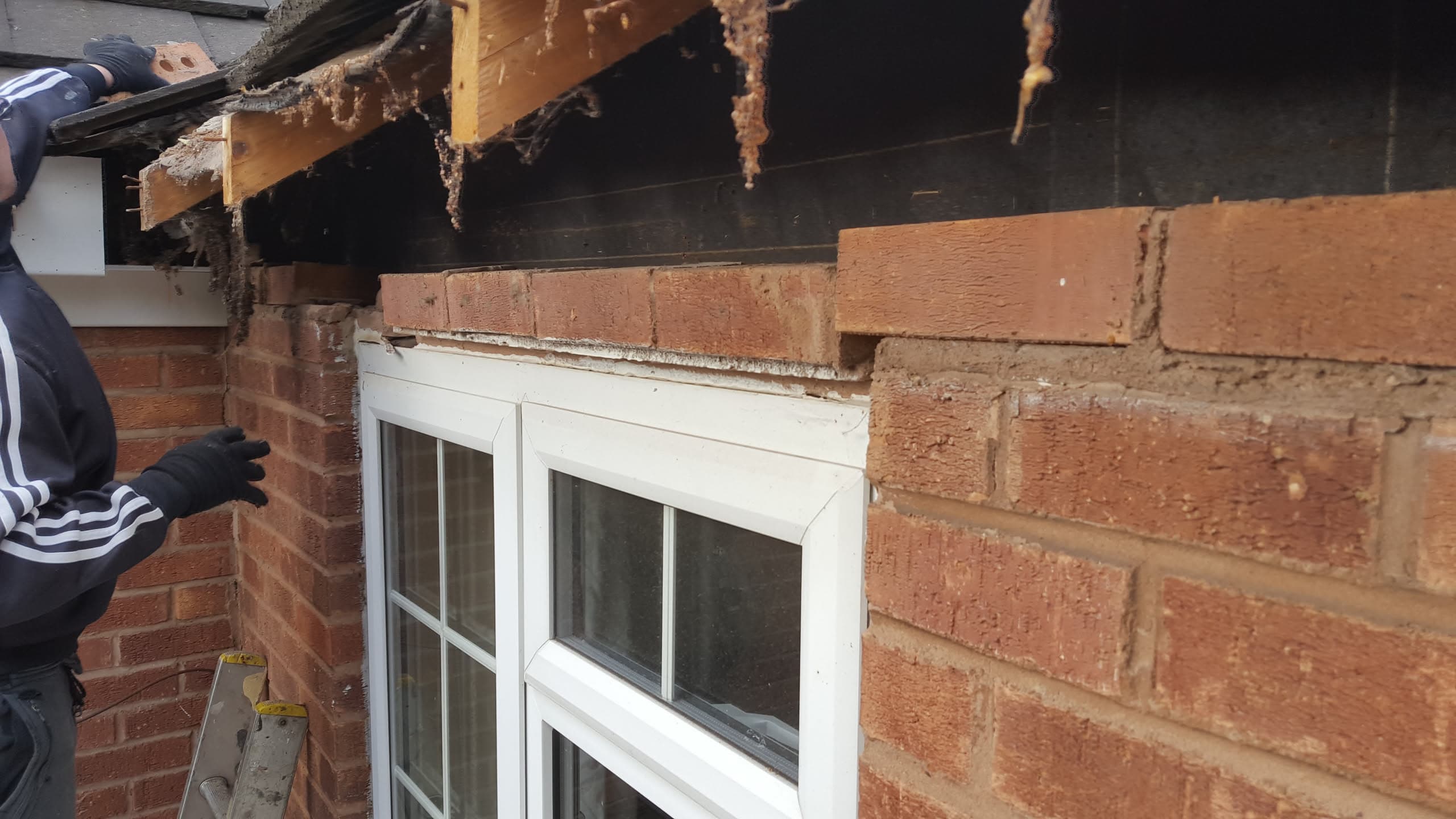
Roofs move. Timber expands in the heat, nail fixings work loose over years of it, and by the end of a hot summer you'll often find tiles that have slipped a few inches down the batten. From the ground they can look almost normal — you're looking for a line that isn't straight.
Stand well back, on the far side of the road if you can, and look along the courses rather than at them. A tile out of line, a shadow where there shouldn't be one, or a gap along the eaves is worth a closer look. Do the same from the back garden — most people only ever check the front of their own house.
3. Ridge and hip mortar
The mortar bedding your ridge tiles has a life of roughly ten to fifteen years before freeze-thaw starts breaking it up. Once a ridge tile is loose it's both a leak and a genuine safety problem — a ridge tile coming off in a January gale does real damage.
From the ground, look for gaps or dark lines under the ridge, bits of mortar sitting in the gutter, or a ridge tile that looks slightly proud of its neighbours. If your roof is over fifteen years old and has never been re-ridged, assume it needs checking. Modern dry-ridge systems are mechanically fixed rather than bedded in mortar, which is why we fit them as standard on a re-roof.
4. Chimneys and flashings
More "roof leaks" come from around the chimney than from the tiles themselves. Lead flashing shrinks and expands with the temperature and eventually lifts away from the brickwork; the cement fillet some builders used instead of lead cracks even faster.
- Look for lead that has visibly lifted, curled at the edge, or dropped out of its chase in the brickwork
- Dark staining running down the chimney brickwork means it's already taking water on
- Crumbling or missing pointing on the stack itself — the stack is the most exposed brickwork on the house
- Check the flaunching at the top around the pots. Cracks there let water straight down inside the stack
5. Flat roofs — clear it and find the outlet
Extensions, garages, dormers and porches all end up as leaf traps. Clear the debris off and, more importantly, find the outlet and make sure it's running. Standing water on a flat roof isn't automatically a disaster, but water sitting against a seam all winter will find any weakness there is.
On felt, look for blisters, splits, and edges lifting where it meets the wall. Felt that has gone brittle and grey is near the end. If yours is patched every couple of years, autumn is the point to decide whether you're patching it again or replacing it properly — we fit Firestone EPDM rubber, which goes on in a single sheet with no seams across the field of the roof.
6. Moss — and why not to jet wash it
Moss holds water against the tile and pushes it up under the laps. In a freeze it expands and lifts the tile clear. Worth dealing with — but not with a pressure washer.
Jet washing a tiled roof strips the protective surface off concrete tiles, forces water up under the laps and into the roof space, and washes the loose moss straight into your gutters and downpipes. We've been called out to blocked drains and soaked lofts caused by a well-meaning jet wash more than once. Scraped off by hand, or treated and left to weather off, is the right way.
7. Ten minutes in the loft
Pick a bright day, go up with the light off, and look at the underside of the roof. Daylight showing through where it shouldn't tells you exactly where a tile has gone. Then look for dark staining on the timbers, damp or compressed insulation, and any felt that has sagged into a pocket — a pocket holds water and will eventually let go.
Do it again after the first proper downpour. A stain that is wet is an active leak; a stain that is dry and old may be something that was fixed years ago. Knowing which is which saves you paying to chase a leak that isn't there.
What's actually worth paying for before October
If the budget is limited, the order is straightforward. Gutters cleared first — it's cheap and it protects the most expensive thing to put right. Then anything loose at height: slipped tiles, a moving ridge tile, lifted lead. Those are small jobs in September and emergency call-outs in December.
Everything else — the tired felt roof, the fascias that need doing, the re-roof you know is coming — can usually wait for spring, as long as you know it's on the list rather than finding out in the middle of a storm.
Not sure what you're looking at?
That's fair enough — most of this is hard to judge from the ground. Every WeatherTech quote starts with a free drone survey: we photograph every tile, ridge, valley and flashing up close and go through the pictures with you, so you can see the state of your own roof rather than take our word for it. No ladders against your gutters, no obligation, and no pressure to book anything on the day.