

Materials
Why we use Firestone EPDM instead of felt
3 May 2026 · Scott Ryan
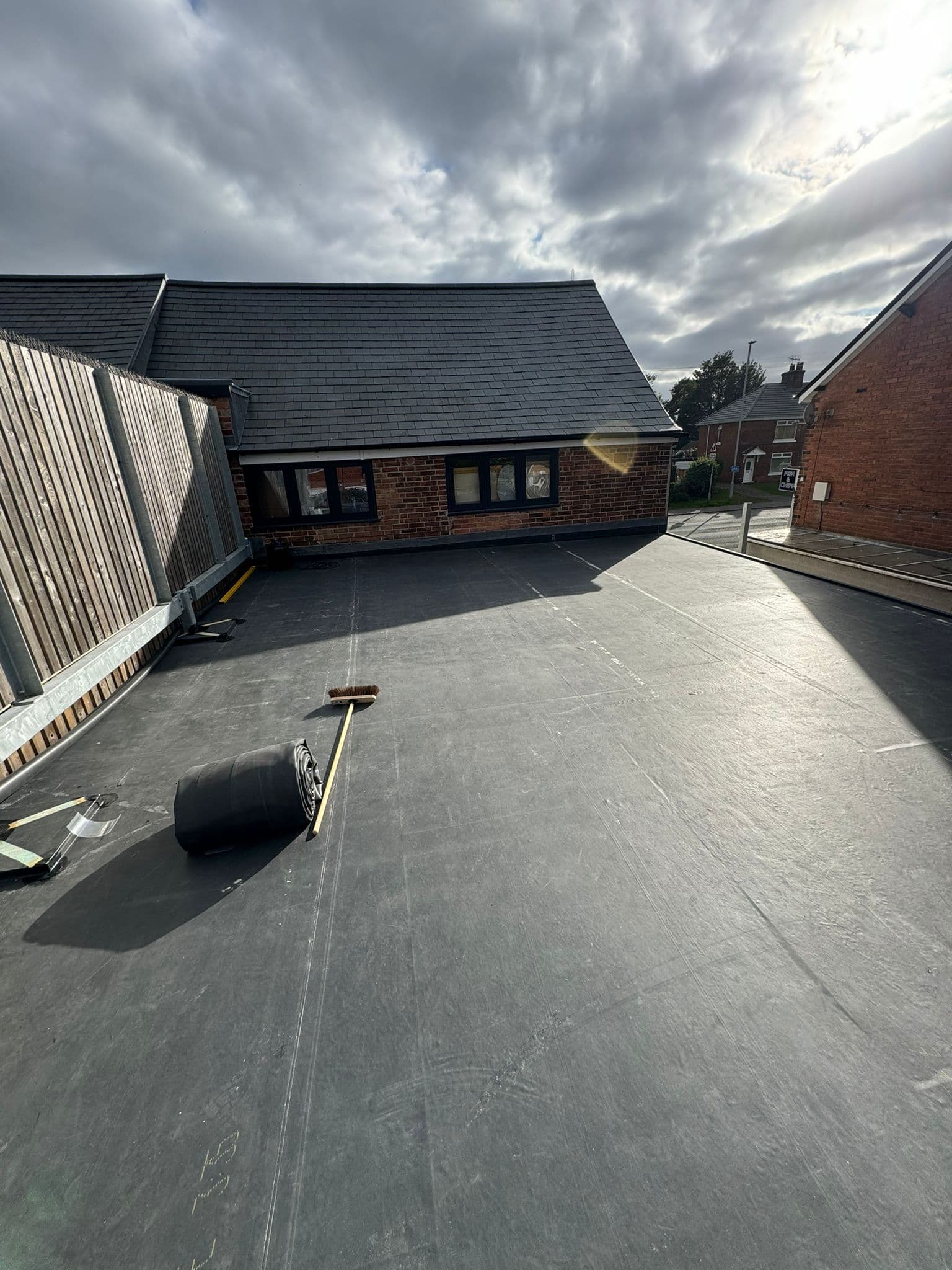
Walk down any street built before 2000 and you'll find felt-covered flat roofs in various stages of failing. Bubbling, cracking, leaking around the trims. Felt is the cheapest way to cover a flat roof, and it's the reason flat roofs have a reputation for being problematic. They shouldn't be.
We've fitted Firestone EPDM rubber on every flat-roof job for the last five years. Here's why.
1. Lifespan you can actually plan around
Felt typically lasts 8–15 years before it needs replacing. Firestone EPDM comes with a 50-year manufacturer warranty. We've laid roofs in 1985-built houses where the original felt has been replaced twice; if it had been EPDM, we'd be touching it for the first time now.
2. One sheet, no seams (mostly)
Firestone supply EPDM in single sheets up to 15m wide. A typical garage or kitchen-extension flat roof comes off a single sheet with no joints anywhere on the field of the roof. No seams means no places for water to creep in over time.
3. It moves with the building
EPDM is genuinely elastic. It stretches and shrinks with summer/winter temperature swings without cracking. Felt does this too — for a while — and then stops being elastic and starts being brittle. That's when it cracks at the trim line and you get a leak.
The trade-off
EPDM is more expensive per square metre than felt. Maybe 30% more on the materials. But the labour is similar, and you don't pay us again in 10 years. Over a 25-year horizon, EPDM works out cheaper.
“We don't fit felt anymore. Once you've laid a Firestone roof and seen one back 10 years later still looking like the day it went on, you stop being interested in shortcuts.”
— Scott Ryan, WeatherTech